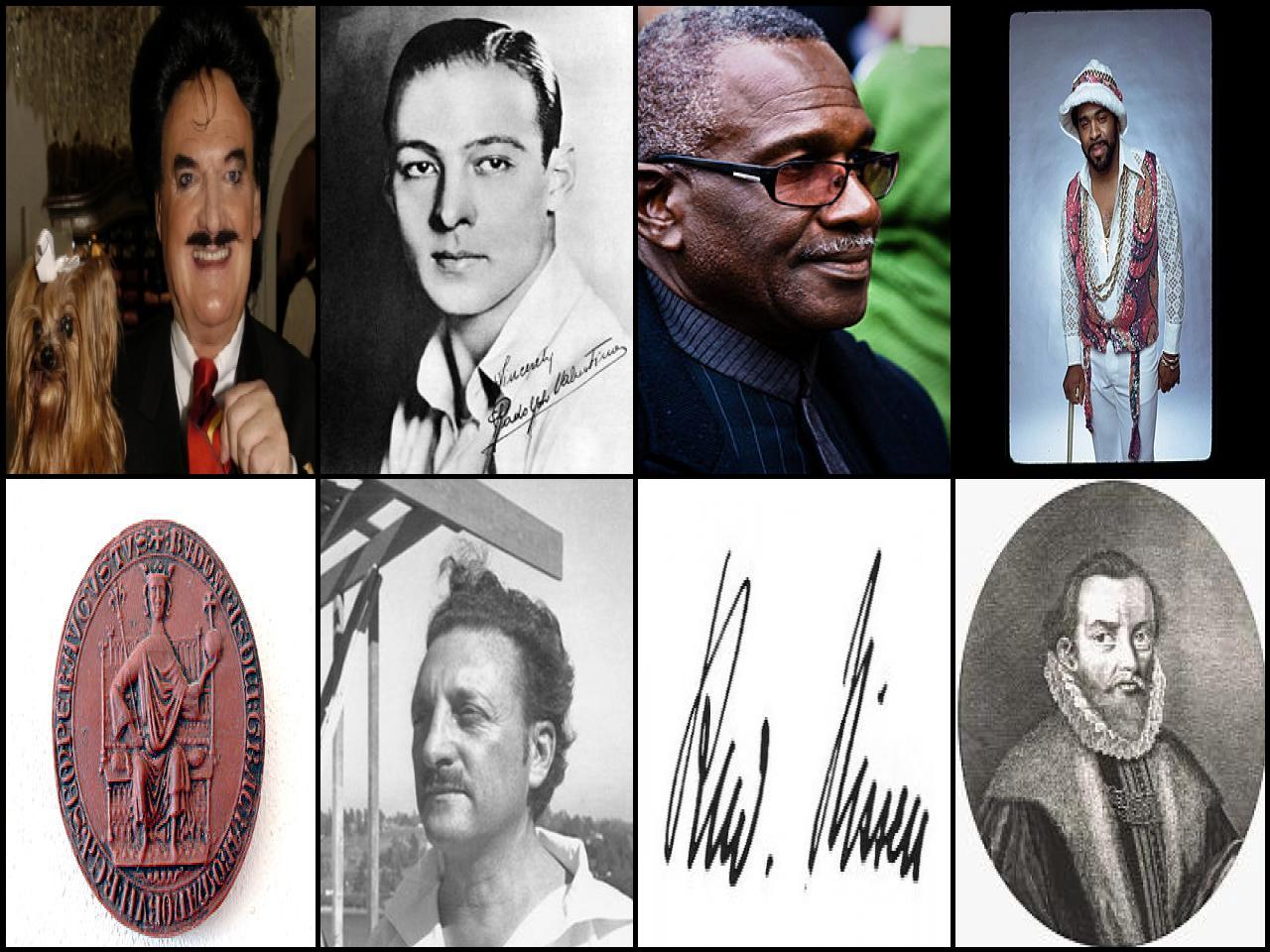
Lista de Personas Famosas llamadas Rudolf
Rudolf Arendt
Rudolf Fleischmann
Rudolf Fleischmann was a German experimental nuclear physicist from Erlangen, Bavaria. He worked for Walther Bothe at the Physics Institute of the University of Heidelberg and then at the Institute for Physics of the Kaiser Wilhelm Institute for Medical Research. Through his association with Bothe, he became involved in the German nuclear energy project, also known as the Uranium Club; one of Fleischmann’s areas of interest was isotope separation techniques. In 1941 he was appointed associate professor of experimental physics at the newly established Reichsuniversität Straßburg, in France. Late in 1944, he was arrested under the American Operation Alsos and sent to the United States. After he returned to Germany 1946, he became Director of the State Physical Institute at the University of Hamburg and developed it as a center of nuclear research. In 1953, he took a position at the University of Erlangen and achieved emeritus status in 1969. He was a signatory of the Göttingen Manifesto in 1957.
Rudolf Kompfner
Rudolf Kompfner was an Austrian-born inventor, physicist and architect, best known as the inventor of the traveling-wave tube (TWT).
Rudolf Ising
Rudolf Carl «Rudy» Ising fue un animador, productor y director estadounidense conocido por haber colaborado en la fundación de los estudios de animación Warner Bros. Cartoons, Inc. y MGM Cartoon Studio junto a su compañero Hugh Harman.
Rudolf Blohm
Rudolf Bahmann
Rudolf Bahmann was an East German politician. Between 1973 and 1977 he served as chairman of the council in the Gera administrative district.
Rudolf Leonhard
Rudolf Leonhard was a German author and communist activist.
Rudolf of Mecklenburg-Stargard
Rudolf of Mecklenburg-Stargard was a Roman Catholic bishop of Skara (Sweden) and Schwerin. He resided in Bützow.
Rudolf Kolisch
Rudolf Kolisch was a Viennese violinist and leader of string quartets, including the Kolisch Quartet and the Pro Arte Quartet.
Rudolph Arnheim
Rudolf Arnheim fue un psicólogo y filósofo nacido en Berlín, Alemania en 1904. Influido por la psicología de la Gestalt y por la hermenéutica, realizó importantes contribuciones para la comprensión del arte visual y otros fenómenos estéticos. Ha publicado libros sobre la psicología del arte, la percepción de las imágenes y el estudio de la forma. Probablemente su libro más conocido sea Arte y percepción visual. Psicología del ojo creador. Madrid: Alianza. 1979. Uno de sus argumentos más originales, presentado en el libro "visual thinking" es que el hombre moderno está permanentemente acosado por el mundo del lenguaje. Arnheim plantea que existen otras formas de aprender el mundo, basadas por ejemplo, en la vista. Para Arnheim, existen ciertas cualidades y sentimientos que captamos en una obra de arte que no pueden ser expresadas en palabras. Esto se debe a que el lenguaje no provee de un medio de contacto directo con la realidad. El lenguaje solamente sirve para nombrar lo que ya ha sido escuchado, visto o pensado. En este sentido el medio del lenguaje puede paralizar la creación intuitiva y los sentimientos.