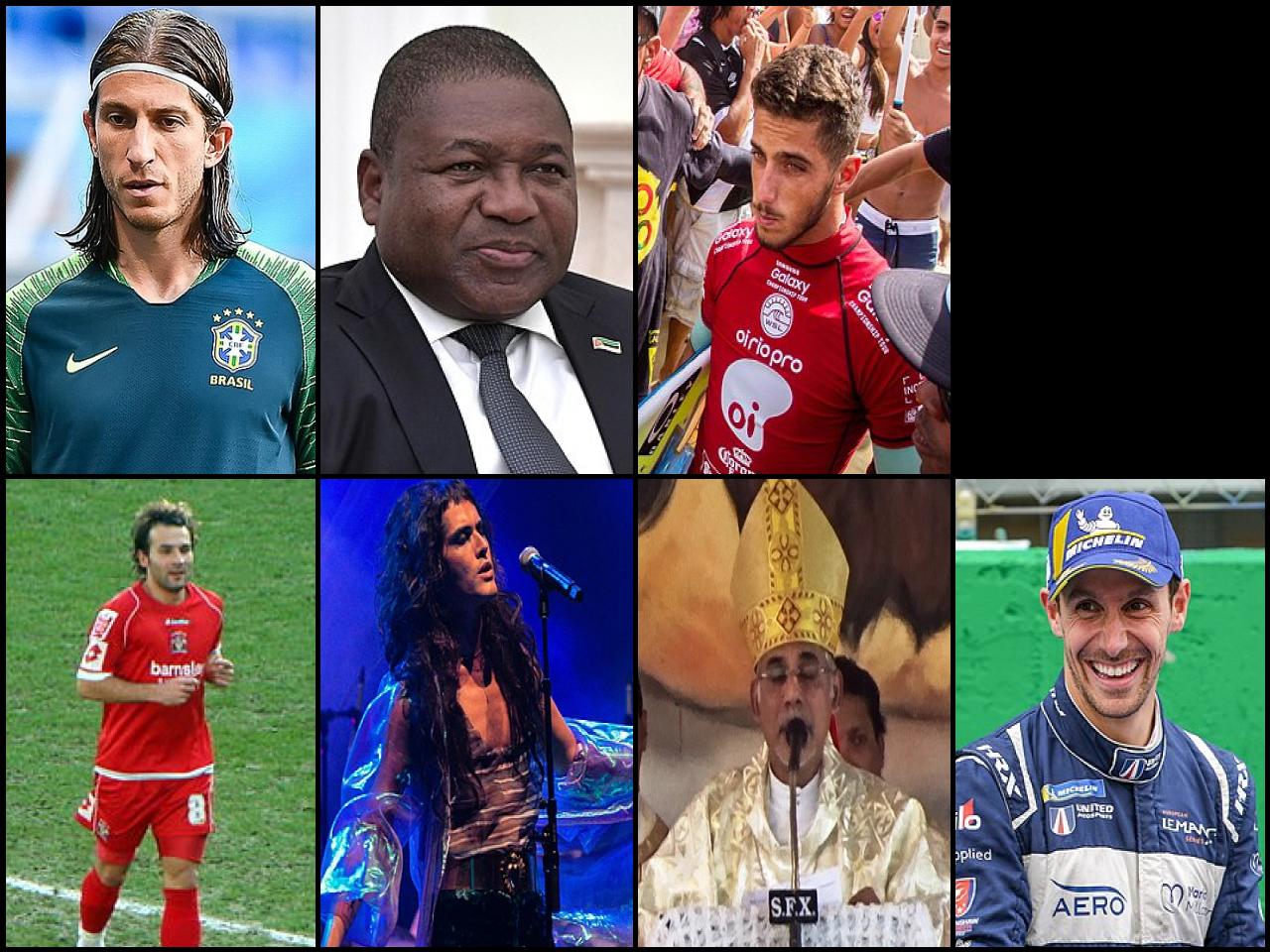
Lista de Personas Famosas llamadas Philip
Philip Pinckney Curtis
Philip Newton
Felipe Hurepel de Clermont
Felipe Hurepel, nació en el 1201 y murió en 1234, fue conde de Clermont, de Boulogne, de Aumale y de Dammartin, era hijo de Felipe Augusto, rey de Francia y de Inés de Méran.
Philip Hunloke
Major Sir Philip Hunloke was a British sailor and courtier.
Philip Brabazon
Philip Foley
Philip Foley was the youngest of the three surviving sons of the British ironmaster Thomas Foley. His father transferred all his ironworks in the Midlands to him in 1668 and 1669 for £60,000. He also settled an estate at Prestwood near Stourbridge on him on his marriage, to which Philip added the manor of Kinver.
Philip Wentworth
Sir Philip Wentworth of Nettlestead, Suffolk was an English knight and courtier. Wentworth was a great-grandfather of Jane Seymour, third wife of King Henry VIII, and was beheaded at Middleham, Yorkshire.
Philip Bouverie-Pusey
Hon. Philip Bouverie-Pusey was an English heir and landowner.
Philip I de Croÿ
Philip I de Croÿ (1435–1511) was Seigneur de Croÿ and Count of Porcéan. Philip I was a legitimate heir to the powerful House of Croÿ. He was the eldest surviving son of Antoine de Croÿ, Comte de Porcéan and Margaret of Lorraine-Vaudémont. Philip was raised with Charles the Bold, who arranged Philip's marriage to Jacqueline of Luxembourg in 1455. The bride's father, Louis de Luxembourg, Count of Saint-Pol, was extremely against the alliance and attempted to win his daughter back by force, but the Count of Porcéan closed the borders of Luxembourg and announced that the marriage had been consummated. He was also Governor of Luxembourg and Ligny.
Felipe el Diácono
Felipe el Diácono fue un judío grecoparlante del siglo I que aparece en Hechos de los Apóstoles y que no debe confundirse con Felipe el Apóstol. Felipe el diácono fue constituido para cuidar a los pobres de la comunidad cristiana de Jerusalén cuando los apóstoles ordenan a los primeros siete diáconos. Felipe fue elegido por Dios para evangelizar, convertir al cristianismo y bautizar al primer no judío un eunuco etíope en Gaza, acontecimiento que suele tomarse como el punto de partida de la Iglesia etíope. Felipe apodado el Evangelista predicó e hizo milagros en Samaria, convirtió a Simón el Mago y sanó, exorcizó y bautizó a gran cantidad de samaritanos, fueron tantos que la situación obligó a Pedro a dirigirse junto con Juan a Samaria para impartir el sacramento de la Confirmación a los integrantes de esta nueva comunidad. Más tarde, se radicó en Cesarea, donde tuvo cuatro hijas, las cuales adquirieron el don de profecía, y allí recibió la visita de Pablo de Tarso .Felipe fue muy centrado en dios.